North Macedonia – Village Patron Saint Festivals and Community Heritage
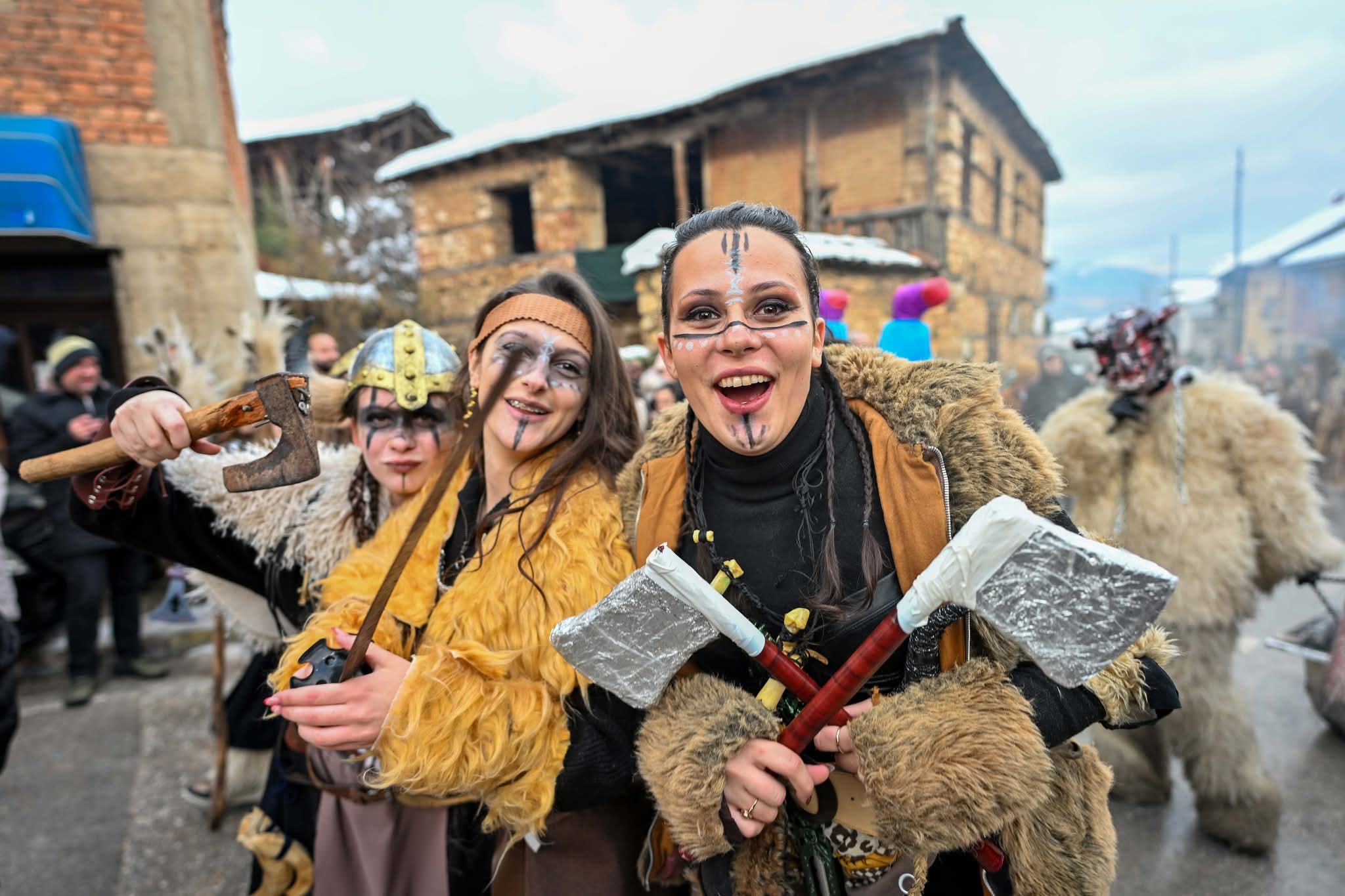
The Day the Village Becomes One: North Macedonia's Patron Saint Festivals and the Architecture of Belonging
Every village in North Macedonia has a patron saint, and once a year the village throws a party in that saint's honor that may last three days, involve every household in the community, feed hundreds of people from communally prepared food, fill the churchyard with music and dancing, and serve as the occasion on which the village reconstitutes itself as a village — calling back its emigrants, reconciling its feuds, cleaning its ancestors' graves, and reaffirming, through the specific communal acts of preparation, gathering, and celebration, that it is still, and intends to remain, a community.
The **sabor** — derived from the Old Church Slavonic *sʺborʺ*, meaning "gathering" or "assembly" — is the Macedonian term for the village patron saint's feast, and it is among the most important social institutions in North Macedonian cultural life. It is simultaneously a religious occasion (the Orthodox Christian feast day of the patron saint to whom the local church is dedicated), a community social event (the village's primary annual gathering), an economic institution (the feast redistributes community resources through communal food preparation and feeding), a kinship occasion (families from the village gather from wherever emigration has taken them), and a political event (the village's relationships with neighboring communities, with the municipal and national government, and with the cultural organizations that participate in the celebration are all enacted and renegotiated through the sabor's framework).
Understanding the sabor requires understanding the specific cultural and historical context that makes a village feast in the western Balkans something considerably more politically and socially charged than a harvest festival elsewhere. North Macedonia is a country whose territory has been, across its recorded history, contested between empires, kingdoms, and ethnic groups — Byzantine, Bulgarian, Serbian, Ottoman, Greek, Albanian, and Macedonian in various combinations and sequences — and whose population has maintained its specific cultural identities within this contested landscape through exactly the kind of local community institution that the sabor represents: the recurring, obligatory, emotionally powerful occasion that anchors identity to specific place, specific ancestry, and specific communal practice.
The Church as Community Anchor
Every Macedonian village sabor is organized around a village church, and the specific patron saint whose feast the sabor celebrates is the saint to whom that church is dedicated. This organizational structure — church as community anchor, saint's feast as community occasion — is common to Orthodox Christian cultures across the Balkans and Eastern Europe, but its specific character in Macedonian village life reflects a historical context that gives the church an even more critical anchoring function than it carries in more politically stable Orthodox cultures.
During the five centuries of Ottoman rule over Macedonian territory (roughly 1371 to 1912), the Orthodox church was the primary institutional carrier of Slavic Christian cultural identity in the region. The Ottoman *millet* system — which organized non-Muslim populations by religious community rather than ethnicity or language — gave the Orthodox hierarchy administrative and legal authority over its members in matters of personal status, education, and communal governance. This meant that in the absence of state institutions serving the Slavic-speaking Christian population, the village church was literally the only institution that organized and gave legal standing to community life. The church maintained the birth and death records; the priest was the primary educated person in the village; the church calendar organized the social year; and the saint's feast was the year's most important communal occasion.
This institutional weight did not simply disappear when political sovereignty changed — when the Ottoman period ended, when the Yugoslav federation organized the region, when North Macedonia achieved independence in 1991. The village church's role as community anchor had been embedded in the social organization of village life for so long that it persisted as a functional reality even as the state structures around it changed dramatically. The sabor's organizational relationship to the church is therefore not simply a matter of religious observance; it is the continuation of a social-institutional function that the church acquired through historical circumstance and maintained through the depth of its embeddedness in community life.
The specific churches around which Macedonian sabori are organized range from medieval foundations of considerable architectural and historical significance — the region has one of the densest concentrations of medieval Orthodox churches in the Balkans, many with remarkable fresco cycles dating from the thirteenth through fifteenth centuries — to relatively modest village churches rebuilt or restored in the nineteenth and twentieth centuries. The patron saint may be one of the great saints of the Orthodox calendar — Saint Elijah (*Sv. Ilija*), Saint George (*Sv. Georgi*), Saint Nicholas (*Sv. Nikola*), or the Virgin Mary (*Sv. Bogorodica*) — or a more locally significant saint whose cult is specific to the Macedonian tradition. The feast day of the patron saint determines the date of the sabor, and the timing of the celebration follows the Orthodox liturgical calendar rather than the civil calendar — which means that many Macedonian sabori fall at moments in the agricultural year that the traditional peasant calendar had already invested with significance, creating overlaps between Christian observance and pre-Christian seasonal practice that the Macedonian tradition has not always tried to disentangle.
The Slava: When the Household's Own Saint Is Honored
Alongside the village sabor, the Macedonian cultural tradition maintains the household equivalent: the **slava**, the family patron saint feast in which a specific household celebrates the saint that the family has honored for generations, typically inherited patrilineally from the grandfather's grandfather's grandfather in a chain of obligation and identity that connects the contemporary family to its most distant accessible ancestors.
The slava tradition — shared with Serbian culture and present in various forms across Orthodox Balkan cultures — represents the finest grain of the same social architecture that the sabor represents at the village level: the recurring, obligatory, structurally central occasion that generates community and kinship identity through the specific communal acts it requires. The slava requires the hosting family to prepare specific foods (the *kolač*, a round loaf of enriched bread decorated with religious symbols; the *žito*, a boiled wheat mixture associated with commemorating the dead; and the *slavski kolač* — a larger decorated bread that the priest blesses at the slava's liturgical opening), to invite extended family and friends, to maintain the ritual presence of a candle burning before the household's icon of the patron saint throughout the day, and to receive guests with the hospitality that the occasion demands.
The slava's specific character as a family institution — rather than a community institution — means that it performs a different, complementary social function to the village sabor. The sabor reconstitutes the village as a community; the slava reconstitutes the extended family as a kinship network, bringing together cousins who may not have seen each other since the previous year's slava, maintaining relationships across geographic dispersal, and keeping alive the chain of family identity that connects the current generation to the ancestral household whose patron saint first established the family's specific obligation.
The two institutions together — sabor and slava — create a social architecture of overlapping obligations and belonging that weaves individuals into multiple concentric communities: the family (constituted by the slava), the village (constituted by the sabor), and the broader cultural and religious community (constituted by the shared Orthodox liturgical calendar within which both institutions are embedded). A Macedonian villager who participates in both the family slava and the village sabor is annually reaffirming their membership in each of these communities through the specific acts of preparation, participation, and hosting that each occasion requires.
The Preparation: Community Work as Community Making
The sabor's social function as community-generation is most visible in its preparation phase — the days before the feast during which the village organizes the communal labor required for the celebration. The preparation activities vary by village but typically include: the communal cleaning of the churchyard and the church itself; the preparation of communal food (most traditionally the roasting of whole animals — lamb, pig, or in some villages the traditional *kurban*, a specific sacrificial animal whose preparation follows precise ritual protocols); the repair and decoration of the village common spaces; and the organization of the musical performance that will accompany the celebration.
The **kurban** — the ritual animal sacrifice that accompanies many Macedonian sabori — is among the tradition's most distinctive elements and the one that reveals most clearly the pre-Christian substrata that Orthodox Christian practice in the region has absorbed rather than replaced. The *kurban* (from the Arabic *qurbān*, "sacrifice," borrowed through Turkish, reflecting the Ottoman cultural overlay on older practices) is an animal — most commonly a lamb — that is slaughtered at the church following a specific ritual procedure, its blood sometimes sprinkled on the church threshold in a gesture whose connection to very ancient sacrificial traditions is difficult to miss. The meat is then communally cooked and distributed as part of the sabor's feast. The Orthodox church's relationship to this practice has been complex — the kurban's sacrificial character is not strictly part of Orthodox Christian theology — but the practice has been accommodated as a folk Christian institution rather than suppressed.
The communal food preparation — the roasting of the *kurban*, the baking of the *kolač*, the preparation of the multiple dishes that the sabor's feast table requires — is organized through the village's informal mutual assistance network: families contribute labor, ingredients, and expertise in a rotating system of obligation and reciprocity that mirrors the logic of the *minka* (communal labor) in Andean communities or the *kiyiz tuu* felt-making gatherings of Kyrgyzstan. The families that contribute most to the sabor's preparation are the families that the community recognizes as its most committed members; the family that fails to contribute its customary share of preparation labor has publicly registered its withdrawal from the community's social fabric.
This preparation process is, in the most concrete sense, the act through which the community makes itself. The families that work together to prepare the sabor are constituting themselves as a community through the specific cooperative acts required: the division of labor, the mutual recognition of each family's contribution, the shared purpose and shared standard of quality that the sabor's feast requires. A village that cannot organize its sabor preparation is a village whose social coherence has broken down; the sabor's practical organization is a continuous test of the community's capacity for self-governance.
The Day: Music, Dance, and the Return of the Emigrant
The sabor itself — the feast day — is organized around a sequence of activities that moves from the religious to the social over the course of the day and that integrates the community's different generational, family, and social constituencies through the specific activities each phase involves.
The day typically opens with the **liturgy** — the Divine Liturgy of the Orthodox church, performed in the village church, attended by those community members for whom the religious dimension of the occasion is primary. The liturgy establishes the occasion's sacred character and performs the community's relationship to its patron saint through the specific liturgical forms that the Orthodox tradition prescribes. The blessing of the *kolač* and *kurban* connects the communal food of the sabor to the liturgical blessing that constitutes it as sacred food rather than ordinary provision.
The **procession** that follows the liturgy — carrying the church's icon of the patron saint around the churchyard or through the village — is the transition between the strictly liturgical and the broadly communal phases of the day. The procession brings the sacred into the village space and constitutes the village territory as the patron saint's protected domain. Communities whose territory has historically been contested — and most Macedonian village territories have histories of such contestation — understand the patron saint's presence in the village space as more than symbolic: the saint's protection of the territory is understood as a continuous and real condition whose annual renewal the procession performs.
The **feast** — the communal meal at which the kurban meat, the kolač, the village's various prepared dishes, and substantial quantities of home-made wine (*rakija*, the regional fruit brandy) are shared among all present — is the sabor's social climax. The communal meal enacts the community's equality: regardless of the relative prosperity of different families, everyone at the sabor eats from the same dishes and is served by the same hosts. The specific act of communal eating — sharing food prepared through collective labor, consumed in collective space — is the most ancient and most cross-culturally consistent act of community-formation available to human beings, and its centrality to the sabor reflects an understanding, embedded in the practice even when not explicitly articulated, that eating together is not simply a pleasurable social activity but a constitutive one: the community that eats together makes itself through the eating.
The **music and dancing** that fill the afternoon and evening of the sabor are the most visually and aurally distinctive element of the celebration for outside observers, and the ones that most consistently attract the attention of ethnographers and folklorists who have documented the tradition. Macedonian village music is organized around the **oro** — the traditional chain dance in which participants hold each other's shoulders, waist, or hands and move in a spiraling or rotating pattern around the village common or churchyard — and around the live musical performance of traditional instruments (*gaida* bagpipe, *kaval* flute, *tapan* double-sided drum, and in many contemporary sabori also brass instruments whose presence reflects the Ottoman military band tradition that spread into Balkan folk music during the nineteenth century).
The oro's social function in the sabor parallels that of the communal meal: it is an act of physical community-formation, literally connecting the participants' bodies into a single moving form. The person who joins the oro has physically joined the community; the chain holds; the movement is shared. Families whose members dance together in the oro are publicly performing their kinship and community membership. The returned emigrant who joins the oro at the village sabor after years away in Germany or Switzerland is performing the act of return at its most literal: physically rejoining the community by physically joining the dancing chain.
The Emigrant's Return: Sabor as Homecoming
The Macedonian sabor's most emotionally charged function — the one that participants most consistently identify as the occasion's deepest significance — is its role as the occasion for the emigrant community's annual return. North Macedonia has experienced sustained emigration throughout the twentieth and early twenty-first centuries, its people scattered across Western Europe (particularly Germany, Switzerland, and Italy), Australia, North America, and beyond. The diaspora communities maintain cultural organizations, Orthodox churches, and social networks in their destination countries, but the village sabor in the home village is the occasion that most consistently draws them back.
The emigrant who returns for the sabor is performing an act of identity as much as a social obligation. The return says: I am still of this village, still member of this community, still connected to the ancestors in this churchyard and the patron saint of this church and the families of this place, regardless of how many years I have been away and regardless of how thoroughly my daily life in Stuttgart or Melbourne has become my primary existence. The village receives the returning emigrant as the community member they remain, regardless of absence: they are fed, included in the oro, updated on village events, and treated with the specific combination of familiarity and occasional ceremony that the community accords to its members who have gone away.
The economic dimension of the emigrant's return is also real. The remittances that Macedonian emigrants send to home villages are a significant component of village economics, and the sabor is among the occasions when those remittances are most visibly translated into community investment: the emigrant who contributes to the sabor's preparation costs, who funds the musical entertainment, who donates to the church's maintenance fund at the sabor's collection — is performing community membership through economic contribution in a way that reinforces the emotional bond of return.
The village sabor's function as homecoming occasion for the diaspora has become increasingly important as emigration has increased and as the demographic structure of many Macedonian villages has shifted toward an elderly permanent population with a younger diaspora population. Some villages that could not sustain a sabor from their permanen